

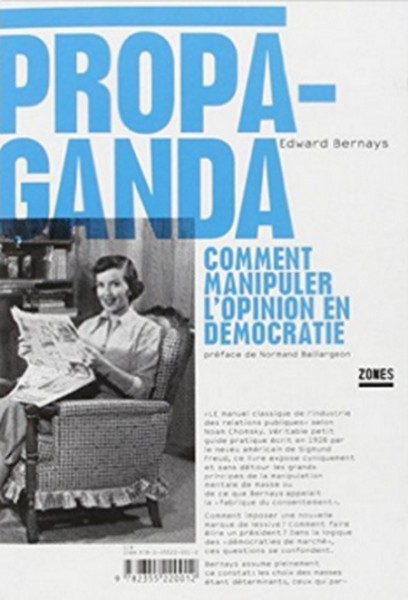
"The classic handbook of the public relations industry," according to Noam Chomsky. A veritable practical guide written in 1928 by Sigmund Freud's American nephew, this book cynically and bluntly lays out the fundamental principles of manipulation.
"The classic handbook of the public relations industry," according to Noam Chomsky. A veritable practical guide written in 1928 by Sigmund Freud's American nephew, this book cynically and bluntly lays out the fundamental principles of mass mind manipulation, or what Bernays called "manufacturing consent." How do you impose a new brand of laundry detergent? How do you get a president elected? In the logic of "market democracies," these questions become one and the same. Bernays fully embraces this observation: since the choices of the masses are decisive, those who influence them will truly hold power. Modern democracy implies a new, invisible form of government: propaganda. Far from criticizing it, the author aims to refine and systematize its techniques based on the insights of psychoanalysis. An enlightening document that reveals that political propaganda in the 20th century was not born in totalitarian regimes but at the very heart of American liberal democracy. Text presented by Norman Baillargeon, philosopher, professor at the University of Quebec at Montreal and author of A Short Course in Intellectual Self-Defense, published by Lux in 2007.